


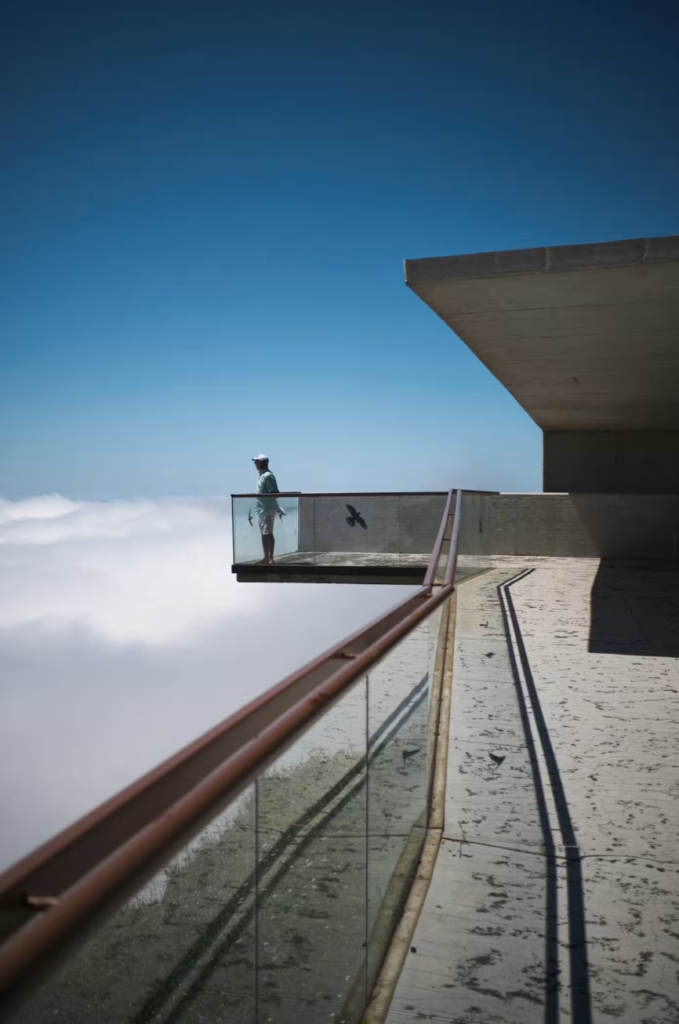
The modern sanctuary is, in many ways, a contemporary version of Thoreau’s Walden. Faced with endless notifications, crowded cities, and a culture that increasingly rewards visibility, a growing number of people are spending significant sums of money to disappear.
The trend can be found in some unlikely places. On the Canary Island of El Hierro, El Elevador occupies a former pumping station perched on a volcanic cliff above the Atlantic. In Sweden, Fabriken Furillen transformed a limestone quarry into a stark industrial hotel. In Tasmania, Pumphouse Point turned an abandoned hydroelectric facility into a retreat reached by a long jetty extending into a remote lake.
What these places sell is not luxury in the traditional sense. There are no beach clubs, celebrity chefs, or packed activity schedules. Instead, they market silence, remoteness, architecture, and the increasingly rare experience of being left alone.
The branding is equally revealing. El Elevador asks prospective guests to write a handwritten letter before booking. Furillen promotes isolation and austerity. Pumphouse Point encourages guests to disconnect from technology and settle into the rhythm of the landscape. Their appeal rests on a simple observation: as modern life becomes more connected, uninterrupted solitude becomes more valuable.
Thoreau built a cabin beside a pond to simplify life and see what remained. Two centuries later, entrepreneurs have discovered there is a surprisingly large market for the same idea.
